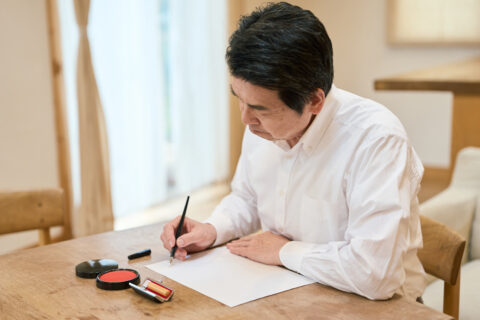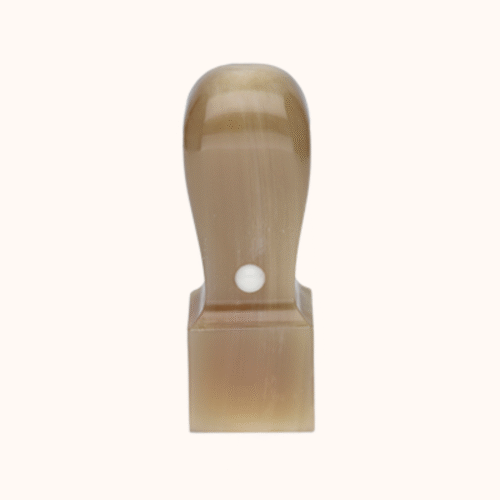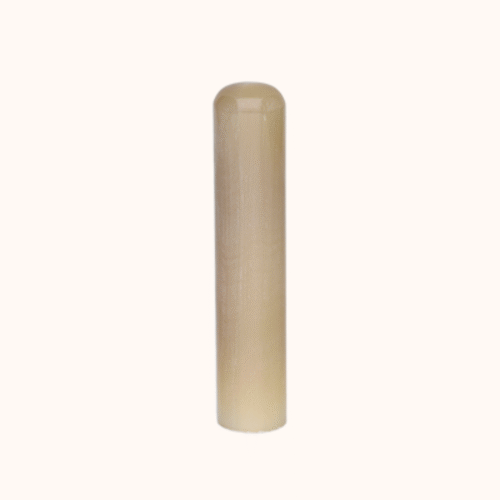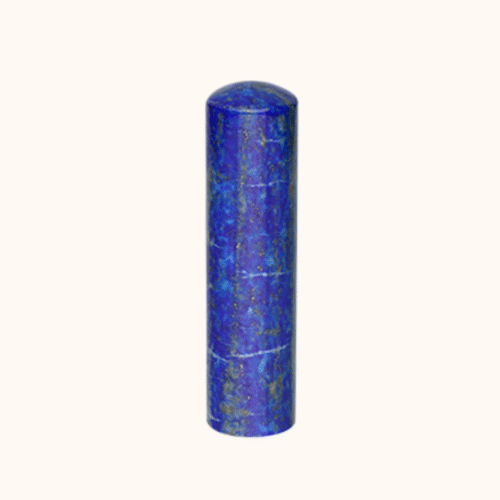


If you came to Japan for a research position and suddenly find yourself staring at a stack of documents you cannot quite read, with a landlord or university administrator pointing at a small red ink box and waiting patiently, you are not alone. The hanko — Japan’s personal seal — shows up early and often in a researcher’s administrative life, and it can catch even well-prepared foreigners off guard.
Unlike a signature, which you can produce anywhere with any pen, a hanko is a physical object you need to have in your possession before you walk into certain appointments. That distinction matters when you are working against the tight timelines that come with research contracts, university onboarding, and apartment leasing.
This guide explains why researchers specifically are asked for seals, which documents tend to require them, and what kind of hanko actually makes sense for your situation. By the end, you will know exactly what to order, what to skip, and how to get through Japanese paperwork without unnecessary delays.
Why This Segment Is Asked for a Seal
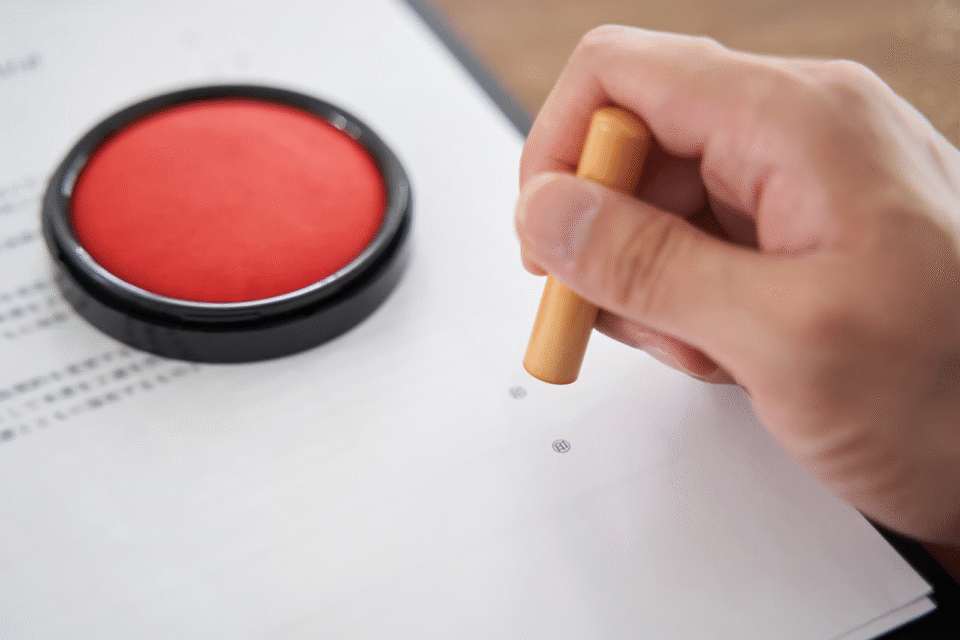
Researchers in Japan — whether you are on a JSPS fellowship, a university contract, a government-funded project, or a private research institute role — tend to move through an unusually dense cluster of formal paperwork in a short window of time. Contract signing, accommodation arrangements, bank account setup, and institutional registration often happen within the first two to three weeks of arrival. All of this creates multiple points where a hanko is expected.
Japanese institutions, both public and private, treat the personal seal as the equivalent of a legally binding signature. For foreigners, the specific expectation varies by institution, but university administrative offices, housing management companies, and local city hall branches commonly ask for one during onboarding.
There is also a social dimension. In academic and research environments in Japan, attention to procedure signals professionalism. Arriving at a contract signing without a hanko — or presenting a clearly improvised substitute — can create friction that slows down your start. Administrators may not say anything directly, but the process often stalls while alternatives are worked out.
A micro-scenario worth considering: a postdoctoral researcher arrives from Germany, assumes a signature will be accepted everywhere, and signs her lab contract that way without issue. Two days later, the housing management office for her university dormitory asks for a hanko impression on the lease agreement. She spends two extra days borrowing a colleague’s generic seal, which the office reluctantly accepts but notes in the file. A simple registered or everyday hanko in her own name would have resolved this before it started.
The practical reality is that hanko for foreigners is an increasingly accommodated concept — many institutions will accept alternatives in a pinch — but having your own seal removes ambiguity and keeps your paperwork moving at the pace your schedule requires.
Common Documents and Timelines
Understanding which documents come when helps you plan your hanko order before you land, not after.
Lease agreements and housing paperwork are often the earliest and most consistent hanko touchpoints for researchers. Whether you are renting a private apartment, moving into university housing, or staying in a guesthouse with a formal contract, the lease commonly requires a seal impression alongside or instead of a signature. This typically happens within the first week of arrival.
University or institute employment contracts vary. Some institutions have adapted their processes for foreign researchers and accept signatures. Others still use traditional contract formats that include a hanko field. It is worth asking your HR contact or administrative liaison in advance, but do not assume a signature will be sufficient.
Bank account applications at Japan Post Bank and some regional banks still commonly request a hanko as part of the account setup process. The seal impression becomes your registered mark for that account. This is often needed in week one or two, since receiving your stipend or salary requires an active account.
City hall registration — the juminhyo process, where you register your address after moving — sometimes involves a hanko depending on your municipality and the specific forms involved. It is not universal, but it does come up.
Lab or department internal forms, expense reports, and equipment borrowing agreements within research institutions often have hanko fields as well. These are lower stakes but add up over the course of a contract.
A realistic timeline for a researcher starting a new position looks like this: housing paperwork in days one through five, bank setup in days three through ten, institutional registration and contract finalization in the first two weeks. If your hanko has not arrived by the time you land, you may already be behind on at least one of these steps.
Common mistakes in this phase:
- Ordering a hanko after arrival instead of before, and waiting for shipping while paperwork piles up.
- Assuming a signature will always be accepted and not confirming with your administrative contact.
- Borrowing a colleague’s seal, which creates informal records that can cause confusion later if the seal does not match your name.
- Ordering an overly formal jitsuin (registered seal) when a simpler mitomein would cover most researcher needs.
Recommended Hanko Type and Size
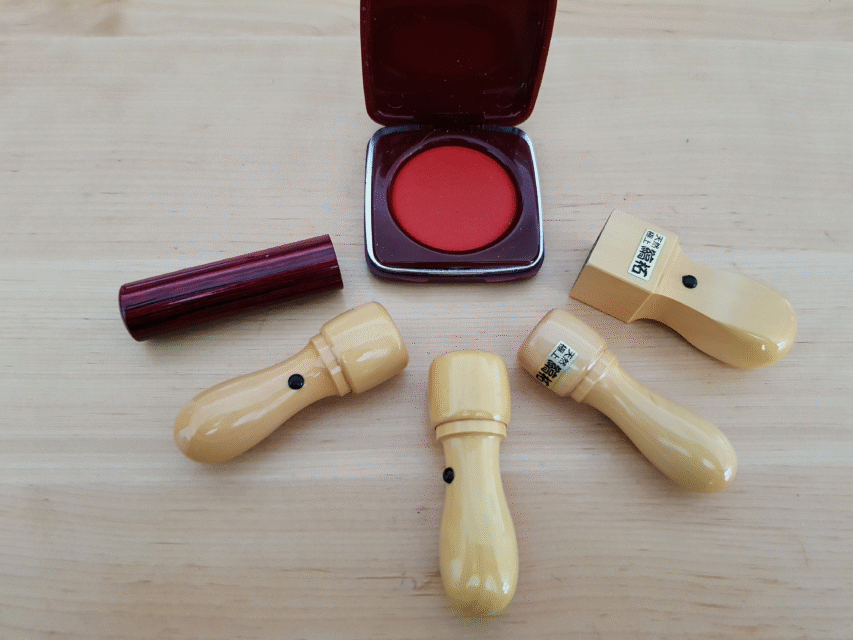
Not every hanko serves the same purpose, and researchers generally do not need the most formal version.
A mitomein — a personal everyday seal — is sufficient for the vast majority of documents a researcher will encounter. Lease agreements, bank applications, internal institutional forms, and city hall paperwork at the general level all fall into the mitomein category. This seal does not need to be registered with the city office to do its job for most of these purposes.
A ginkoin (bank seal) is essentially a mitomein designated for use with your bank account. Some people use the same seal for both purposes; others keep them separate. For a researcher on a fixed-term contract, using one seal across both contexts is practical and commonly accepted.
A jitsuin (registered seal) is required for high-stakes legal documents — real estate purchases, vehicle registration, certain visa-related paperwork. Most researchers on fellowship or employment contracts will not need one during a standard posting. If you do need one, it must be registered at your local city hall after arrival.
On size: the standard recommendation for a personal mitomein is 10.5mm or 12mm in diameter. Larger seals (15mm and above) are more commonly used for business or corporate contexts and would look out of place on personal documents. Stick with 10.5mm to 12mm for everyday researcher use.
On material: resin and wood are affordable and serviceable. Titanium and natural stone are more durable and hold impression detail better over time. For a two or three-year research posting, a mid-range material is a reasonable investment.
Your name on the seal should match the name on your residence card and official documents. If your name includes characters that are difficult to render in Japanese script, a hanko in katakana (the phonetic script used for foreign names) is entirely standard and widely accepted.
Ordering Tips in English
The process of ordering a hanko in English has become straightforward, largely because services designed specifically for foreigners now exist. A few practical points:
Order before you fly. If you know your start date and have your paperwork timeline in mind, ordering two to three weeks before arrival means the seal can be waiting for you when you land, or delivered to your initial accommodation within the first day or two.
Confirm the name. Double-check that the romanization or katakana rendering of your name matches what appears on your passport and residence card. This is the most common source of errors in foreign hanko orders.
Choose a readable font. Overly stylized fonts can make seal impressions difficult to read, which occasionally causes issues with administrative staff who need to verify the impression against your name. A clean, legible font reduces friction.
Keep your ink pad accessible. A hanko without an ink pad is just a carved cylinder. Some seals come with a built-in ink pad; others require a separate one. Vermilion (red) ink is standard for personal seals. Keep the pad in the same pouch as your seal so you are never caught without both.
If you’re still looking for the right role, ComfysCareer is a solid starting point for foreigner-friendly jobs in Japan.
HankoHub offers an English-language ordering process designed for exactly this kind of situation — foreigners who need a practical, correctly formatted personal seal without navigating Japanese-only interfaces. The options are clearly explained, and the katakana rendering for foreign names is handled as part of the order process.
FAQ
Do I absolutely need a hanko as a foreign researcher in Japan? Not always — some institutions have updated their processes and accept signatures. But enough official and semi-official contexts still commonly request one that having your own seal is genuinely practical. It removes uncertainty and keeps your paperwork moving.
Can I use a 100-yen shop seal? Generic seals sold at convenience stores and 100-yen shops are pre-made with common Japanese surnames. They will not have your name on them, which creates problems for documents that need to match your identity. They are also sometimes rejected by bank staff for this reason. A custom seal with your actual name is the right choice.
Will katakana work for my name? Yes. Katakana is the standard script used to render foreign names in Japanese, and it is widely accepted on personal documents. Your seal does not need to use kanji to be valid.
Do I need to register my seal at city hall? For most researcher documents — leases, bank accounts, internal forms — no registration is needed. A jitsuin (registered seal) is only required for specific high-stakes documents. If you are unsure, ask your administrative contact whether the document in question requires a registered seal impression (inkan shomeisho).
What if I lose my hanko? Report it to your bank immediately if it is registered as your bank seal. For everyday use seals, losing one is inconvenient but not a legal emergency. Simply order a replacement and update any accounts or records where the impression is on file.
Can I use a digital hanko? Some Japanese institutions have begun accepting digital seal impressions for internal workflows and email-based approvals. However, for physical lease agreements and bank applications, a physical seal remains the norm. A digital hanko may be useful as a supplement for certain research admin tasks, but it does not replace the physical version for the documents covered in this guide.
Next Steps

If your research posting in Japan is coming up soon — or already underway — the most practical move right now is to get your hanko sorted before the paperwork begins. Visit HankoHub to order a personal hanko in English, confirm the katakana rendering of your name, and have it ready for the lease agreements, bank appointments, and institutional forms that will come in your first two weeks. It is a small thing to prepare, and it makes a noticeable difference when your administrative calendar is already full.